
Your customers are asking AI who to hire. Are you the answer?
Buyers find you before they ever hear your name. They google your category. They ask ChatGPT and Claude who to call. Below are two blogs we run, the live traffic they pull, and proof that the AI models now cite that work by name. Real numbers, straight from the dashboard.
If a buyer cannot find you, you do not exist.
Search is where buyers start. They google your category. They ask ChatGPT for a name. They check Perplexity for sources before they ever pick up the phone.
If you are not there, your competitor is. Every customer they win is one you never got the chance to lose.
Ads stop the day you stop paying. SEO does the opposite.
Work you publish this month still pulls traffic next year, and the year after that. It is the one channel where the effort compounds instead of resetting every 30 days.
Google still matters. It is just not the only door.
Search split in two. The buyer who used to type into Google now also asks ChatGPT, Claude, and Perplexity. Each one sends them somewhere different. Rank only on Google and you are invisible on the other three, which is exactly where attention is moving.
Still where most searches begin. On-page, technical, and links are the foundation the rest of it stands on.
More than 500M weekly users in 2026. It now answers the research, comparison, and recommendation questions buyers used to type into Google.
Where high-intent buyers go to check sources before they call. They cite the pages they trust, and they link them.
The AI models cite our work by name.
Ask either model a real buying-intent question and watch where it pulls from. These are live, unedited responses captured from the same week.
Cited by name.
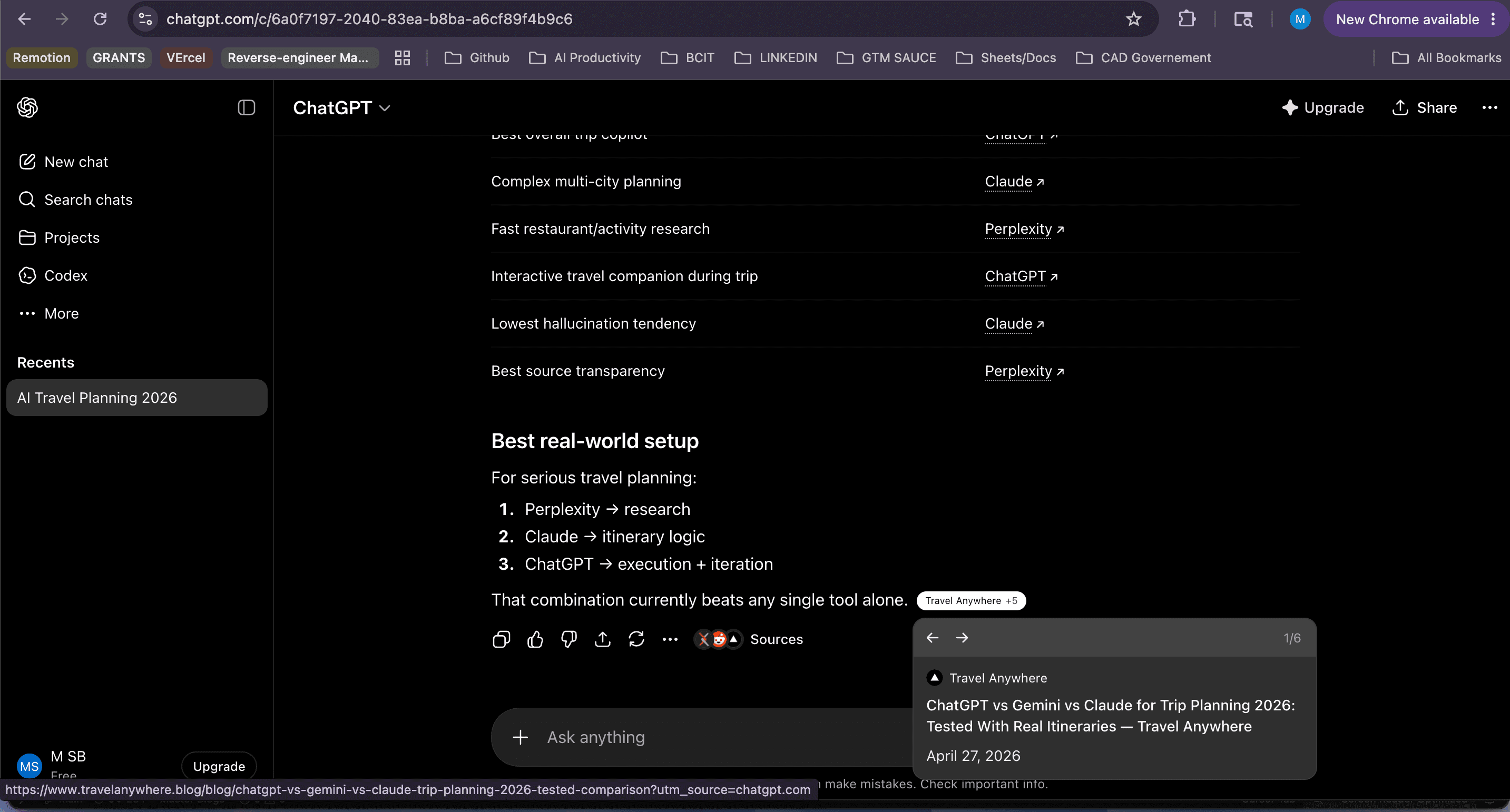
A live ChatGPT answer. Every time the model surfaces that page, it sends a qualified reader back to the site.
Three citations in one answer.
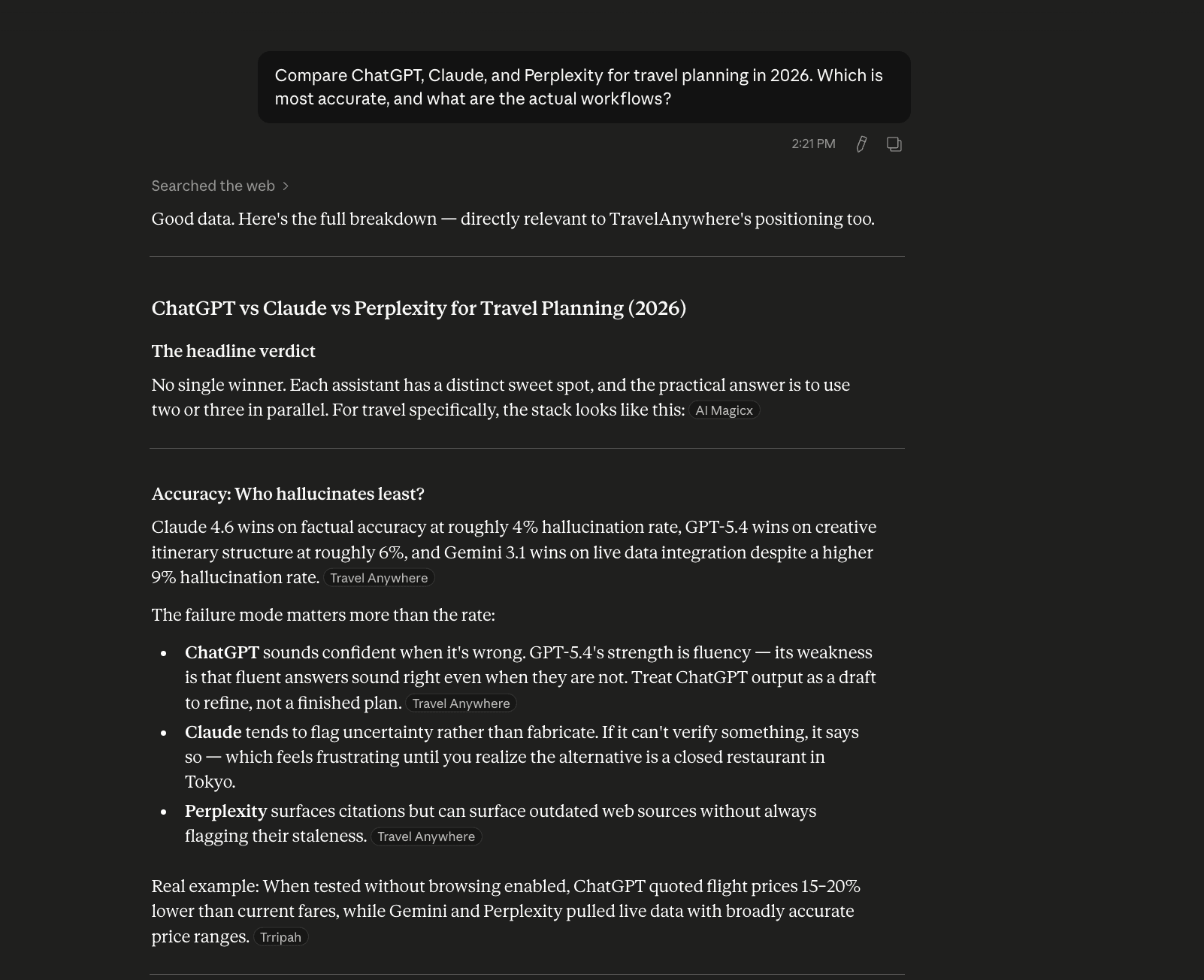
The content earns its place often enough that the model keeps coming back to it inside a single response.
Same system, every engagement.
Nothing improvised, nothing bolted on. The reason these numbers happen is the reason they happen on a client site. Four layers, every project, no shortcuts.
We map how your buyers actually search. On Google, inside AI tools, and across the places they check to validate a name before they call.
A hub-and-spoke structure that owns a whole topic, not one keyword. The difference between ranking once and ranking across a category.
Every piece clears a 17-layer review before it ships. Direct-answer formatting, schema, on-page craft, technical fundamentals. If one check fails, the post does not go live.
Content built to be cited, not just read. Schema markup, citation-source seeding, and brand-mention surfaces that compound across Google and AI search.
Two blogs. Real traffic. Zero ad spend.
Every number here comes straight from PostHog, with setup and test events stripped out. Nothing paid, nothing boosted, shown exactly as captured.
An established blog we run.
Last 30 days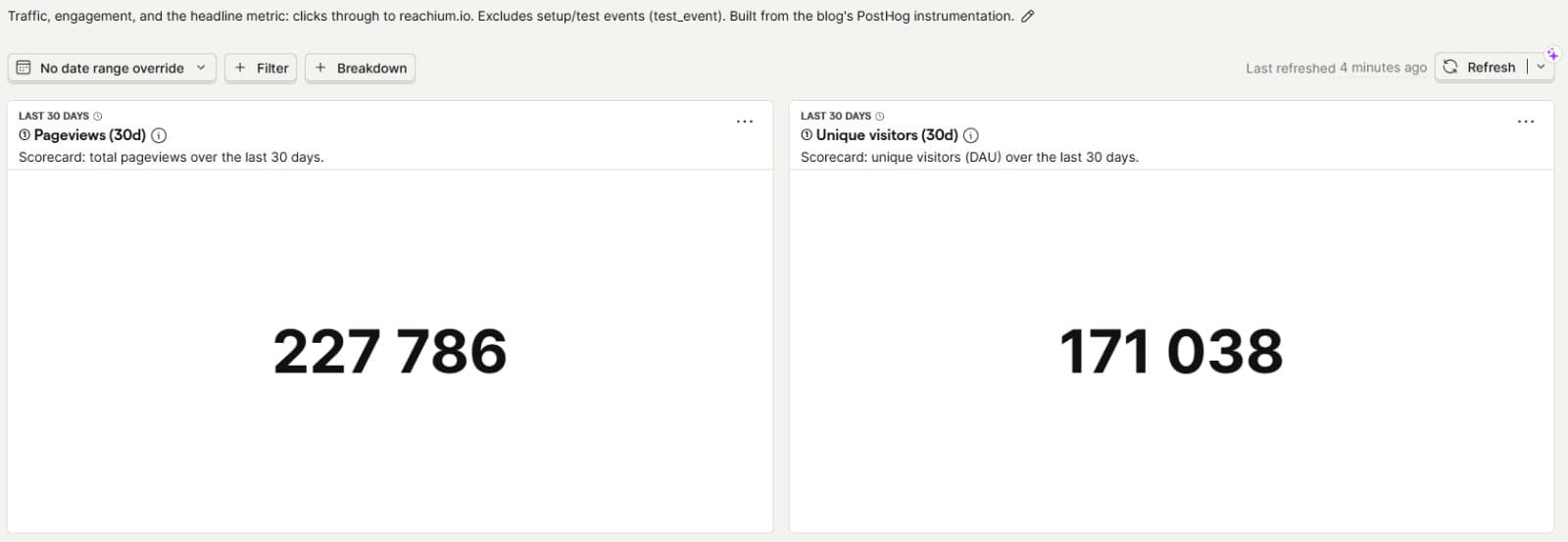
Source: PostHog, 30-day window. Traffic and engagement as captured, setup and test events excluded.
travelanywhere.blog
Climbing · Last 7 days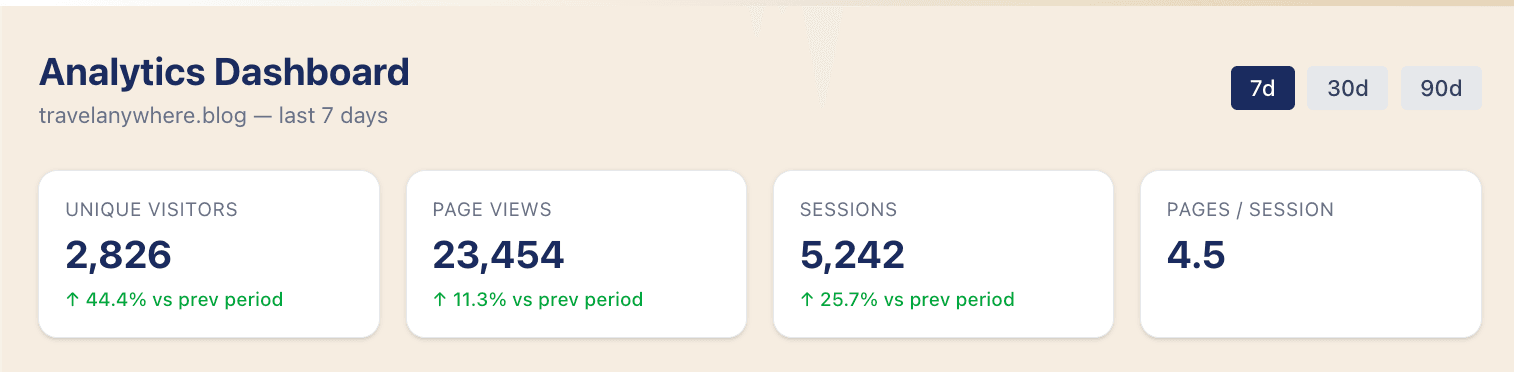
Source: PostHog, 7-day window ending May 28, 2026. Numbers and traffic sources as captured, no edits, no relabeling.
Realistic timelines. No magic.
SEO is a long game. It always has been. Anyone promising results in 30 days is selling you something else. Here is what an honest timeline looks like.
Foundation.
Keyword and topic research, technical audit, content architecture, and fixing what has been quietly blocking growth. Some movement early, but the load-bearing work is still under the surface.
Signal.
First citations land. Google rankings start moving on medium-competition queries. Traffic begins to compound. This is where most properties cross from quiet to climbing.
Compounding.
Citations multiply. Rankings hold. The flywheel turns on its own. By month 12, the traffic from work you paid for in month 3 is several times the size of the bill.
Compound interest.
Everything you published in year one is still working. New content stacks on top. The gap between you and the competitors who started late widens every month.
What this looks like on a client site.
On a domain with authority, budget, and topical depth already in place, the curve compresses. Month-6 signal can arrive in month 3. The compounding window opens sooner. The method does not change. The starting position does.
If you are running ads right now and the spend does not feel like an investment, that is because it is not one. Ads stop the day you stop paying. SEO is the one channel where work done in month 2 is still earning in month 24.
Want to see this on your own site?
A 30-minute walkthrough with live analytics, live citation queries you pick on the call, and live answers to whatever you throw at us. Nothing staged, nothing edited. The strongest proof we can offer is letting you test every claim in real time.